
2nd International Meeting on Cellular and Molecular PD Research and Innovative Care Models
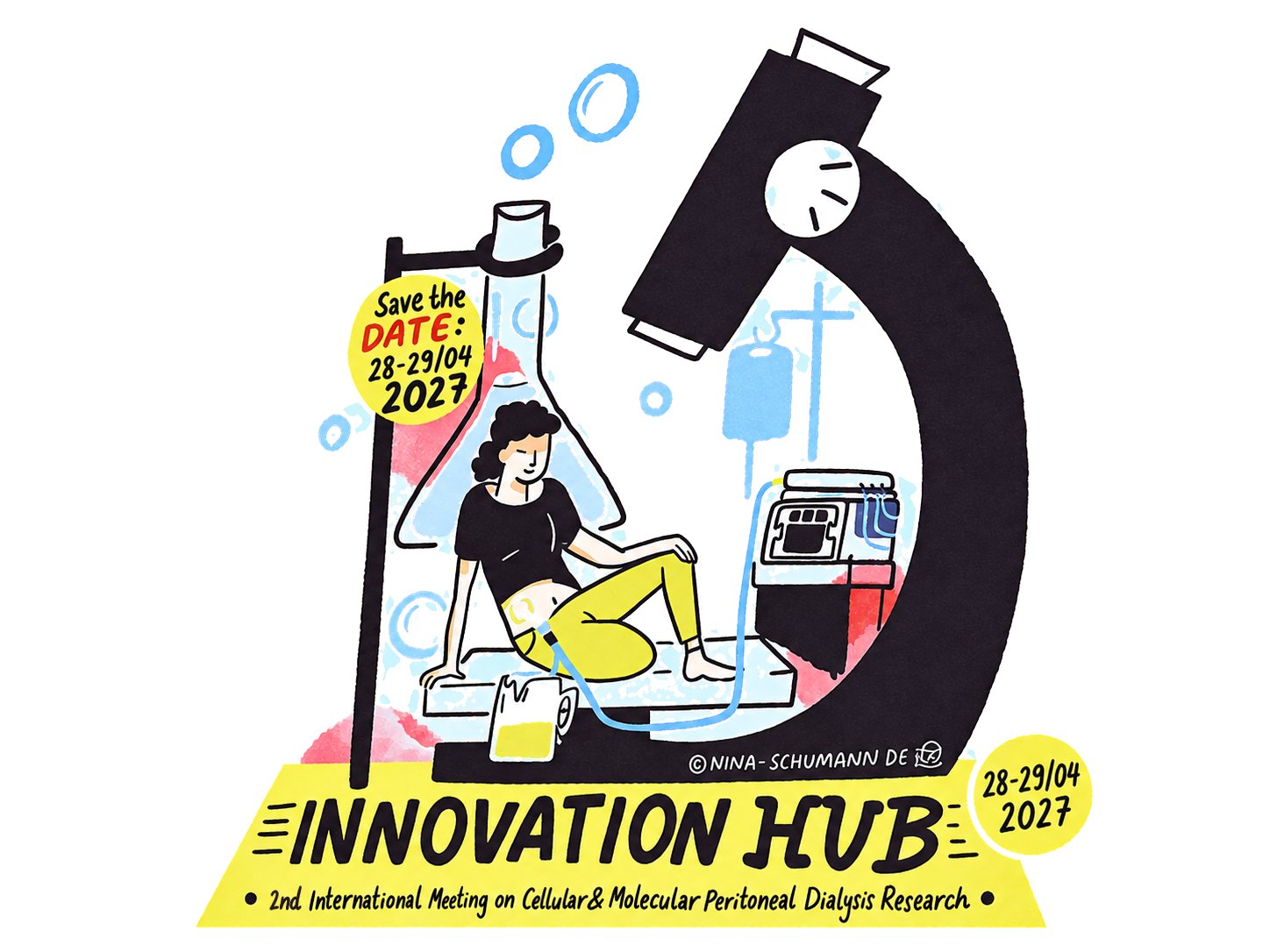
Application open until March, 26th
What
The Second International Meeting on Cellular and Molecular Peritoneal Dialysis Research and Innovative Care Models will bring together PD experts from across the globe. The meeting will provide a forum for presentation and discussion of innovative cutting-edge research and will connect leading scientists to jointly develop basic research strategies for the future.
Background
Although PD offers social, medical and economic benefits it is underutilized in many parts of the world. At Kiel University we have established the SKIP-SH program, which aims to improve the uptake of PD in northern Germany. Within the SKIP-SH framework we have strong clinical goals, but we also want to achieve a better understanding of the molecular mechanisms involved in PD-related outcome and complications.
The Second International Meeting on Cellular and Molecular Peritoneal Dialysis Research and Innovative Care Models will bring together PD experts from across the globe. The meeting will provide a forum for presentation and discussion of innovative cutting-edge research and will connect leading scientists to jointly develop basic research strategies for the future.
Abstract submissions from trainees and junior investigators are strongly encouraged.
When
Join us on
Wednesday and Thursday,
April 28-29, 2027
Where
We meet at the
European Hansemuseum
An der Untertrave 1,
23552 Lübeck, Germany
Background
Although PD offers social, medical and economic benefits it is underutilized in many parts of the world. At Kiel University we have established the SKIP-SH program, which aims to improve the uptake of PD in northern Germany. Within the SKIP-SH framework we have strong clinical goals, but we also want to achieve a better understanding of the molecular mechanisms involved in PD-related outcome and complications.
The Second International Meeting on Cellular and Molecular Peritoneal Dialysis Research and Innovative Care Models will bring together PD experts from across the globe. The meeting will provide a forum for presentation and discussion of innovative cutting-edge research and will connect leading scientists to jointly develop basic research strategies for the future.
Abstract submissions from trainees and junior investigators are strongly encouraged.
Agenda
Wednesday
28th
1:30 pm
3:00 pm
3:00 pm
3:15 pm
4:10 pm
3:15 pm
3:35 pm
3:55 pm
4:10 pm
5:00 pm
5:00 pm
6:30 pm
5:00 pm
5:20 pm
5:30 pm
5:50 pm
6:10 pm
6:30 pm
10:00 pm
Welcome and Introduction
Roland Schmitt & Kevin Schulte, UKSH Kiel, Germany
Session 1: PD Models
Chair: Laura Sievers & Micheal Balzer, UKSH Kiel, Germany
How translatable are PD animal models?
Janusz Witowski, Poznan University of Medical Science, Poland
Maria Bartosova Medvid, University Hospital Heidelberg, Germany
First experiences with human peritoneal 3D Model
Luísa Teixeira-Santos, Universidade Nova de Lisboa, Portugal · FLASH TALK
– Coffee break –
Session 2: Inflammation
Chair: Ulrika Lindström, Karolinska Institutet, Sweden
Update on the role of local inflammation in PD-associated pathophysiology
Claus-Peter Schmitt, University Hospital Heidelberg, Germany
How innate immunity modulates PD membrane survival
Sibylle von Vietinghoff, University Hospital Bonn, Germany
New insight on the immune-metabolic ecosystem in PD
Rebecca Herzog, Medical University of Vienna, Austria
PD outcome: Mechanisms associated with cellular senescence
Akshaya Balasubramanian, UKSH Kiel, Germany · FLASH TALK
VIRTUE Study: PD Awareness Starts in Medical School
Hauke Wülfrath, UKSH Kiel, Germany
– Reception & Dinner –
Thrusday
29th
9:00 am
10:10 am
9:00 am
9:20 am
9:30 am
9:50 am
10:10 am
10:40 am
10:40 am
11:40 am
10:40 am
11:00 am
11:10 am
11:30 am
11:40 am
12:40 am
12:40 am
1:00 pm
Session 3: Pathomechanisms
Chair: Achim Jörres, Medical Center Cologne-Merheim, Germany
To what extent do genetics determine PD outcomes?
Eric Goffin, Cliniques universitaires St. Luc, Belgium
Preserving the peritoneal membrane: What have we learned from the Biology of Fibrosis?
Donald Fraser, Wales Kidney Research Unit, United Kingdom
FROM ABSTRACTS
FROM ABSTRACTS · FLASH TALK
Protecting the peritoneum: Which molecules hold the key?
Klaus Kratochwill, Medical University of Vienna, Austria
– Coffee break –
Session 4: Translation
Chair: Maria Slon Roblero, Hospital Universitario de Navarra, Spain
What does heat sterilization do to the PD fluid?
Sabrina Gensberger-Reigl, FAU Erlangen, Germany
PD osmotic agents: A novel alternative to glucose?
Maxim Voropaiev, Opterion Muttenz, Switzerland · FLASH TALK
Current and future trials in PD
Mark Lambie, Keele University, United Kingdom
Challenges in patient pathways, PD and beyond
Friedrich v. Samson-Himmelstjerna, UKSH Kiel, Germany
Session 5: Panel Discussion
Innovation Hub: Modern approaches to diagnostic and therapeutic strategies – Chair: Roland Schmitt and others
Closing Remarks
Roland Schmitt & Kevin Schulte, UKSH Kiel, Germany